
FU·006 · Book · 87 pages
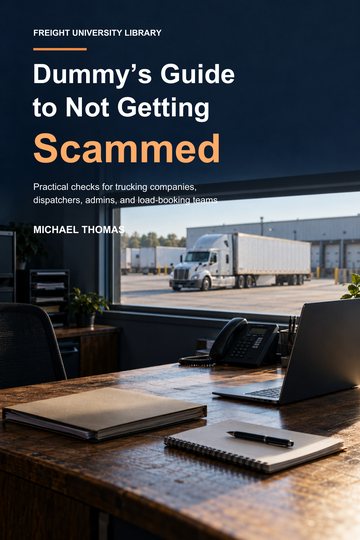
Dummy’s Guide to Not Getting Scammed
Practical Freight-Scam Checks for Carriers, Dispatchers, and Everyone Who Books, Documents, and Gets Paid for the Load.
The company in the signature may be real. The question is whether the person speaking for it is.
About the book
What it's about
In brief: a carrier can lose money before a truck leaves the yard. The book gives a working rule for every hard-to-undo action — who is asking, what authority they have, what exactly changes — and walks through inquiries, callbacks, MC numbers, links, paperwork, rates, pickup, delivery changes, payment changes and incident reporting, with practice decisions, seven field forms and a desk guide.
Practical freight-scam checks for carriers and the people who book, dispatch, document, and collect payment for their loads. Learn how to verify contacts, question changed instructions, handle suspicious messages, document incidents, and report problems.
Twelve chapters follow a load from the first inquiry to getting paid, each with a practice decision and an answer. The back of the book holds seven field forms, a desk guide for when minutes matter, a glossary, and dated sources. Procedures are recommended practice unless a section identifies a law or agency instruction.
What you'll learn
Five things to take away
- Why a real company name or address doesn't verify the person sending the message
- How to make the callback yours and keep the driver out of the middle
- How to treat a changed delivery or pickup instruction as a new decision
- How to verify a bank or payment change before money moves
- What to preserve, how to build a timeline and where to report when something has already happened
Inside
Chapter highlights
Two author-supplied inquiries, carefully qualified.
Contact records before the emergency.
Separate identity from eligibility.
Who may change a load.
Treat a bank change as a fresh instruction.
Preserve, timeline, report.
Built into Freight University
Keep the carrier alive and growing.
Freight University teaches verification as part of running the business, not as an afterthought. Carrier setup, dispatch and broker training all come back to the same habit: know who is asking, confirm it through your own route, and keep the record.
See the free trainingKeep reading
More from the library


FAQ
Questions about this book
Who should read this book?
Owners, dispatchers, administrators, load-booking staff, drivers and anyone acting for a carrier, because each of them can commit the carrier's truck, records, money or reputation.
Does it name companies as scammers?
No. Chapter 1 uses two author-supplied suspected impersonation inquiries and states that it makes no allegation against the companies or people named in them.
Is it really free?
Yes. Give us your first name and email and the PDF downloads right away.
Ready when you are