
FU·007 · Book · 215 pages
Big Rig, Small Kitchen
75 Practical Recipes for the Truck Cab — Breakfasts, Cold Meals, Microwave, 12V Holding, Kettle, Shore Power, Batch Prep, Snacks and Drinks.
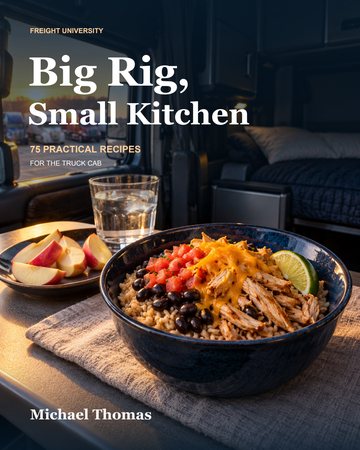
You do not need a full kitchen to make a useful change. You need a safe place to park, food you can keep at the right temperature, a clean bowl and a plan that fits your power.
About the book
What it's about
In brief: 75 overlapping-ingredient recipes across ten chapters grouped by cooking method and power needs for the cab, from cold assembly to shore-power cooking. Each recipe has a photo page and an estimated Fuel Gauge. This recipe-development edition keeps nutrition and costs as estimates, marks photos as AI-generated, and requires rapid heating before any 12V holding in Chapters 4 and 5.
Big Rig, Small Kitchen is a 215-page, 75-recipe cookbook for people who eat in a truck cab. Ten chapters cover breakfasts, no-cook meals, microwave meals, 12V lunchbox and slow-cooker holding after rapid heat, kettle-only meals, shore-power suppers, home batch prep, snacks for a parked break, and hydration drinks. Every recipe states the portion, preparation time, heating method and an estimated Fuel Gauge for calories, protein, carbohydrate, fiber, fat, sodium, cost, time and power.
This is a recipe-development edition. Nutrition and cost values are editorial estimates. Serving photographs are AI-generated. Physical recipe trials, appliance tests, shelf audit and dietitian review were not performed. Chapters 4 and 5 require a separate fast-heating source before optional measured hot holding — they are not marketed as 12V-only slow reheating of leftovers. The book does not claim kitchen-tested dishes, dietitian approval, guaranteed low sodium, fatigue treatments, or a guarantee of passing a DOT physical.
What you'll learn
Five things to take away
- How to pick one breakfast and one lunch you would actually eat, then shop those ingredients first
- How cooking output watts differ from electrical input when sizing a microwave or inverter
- Why Chapters 4 and 5 require rapid heating to 165°F before optional 12V hot holding
- How to keep a parked, attended workspace safe: heat away from the berth, all-electric, one heating appliance at a time
- How to read the Fuel Gauge as an estimate for the listed ingredients and portion — not a personal lab result
Inside
Chapter highlights
Cold oats before rest, or eggs while parked — eight breakfasts that fit the shift.
Cold meals that still need a clean workspace and a working cold chain.
Deep bowl, vented cover, thermometer — and cooking watts versus inverter input.
Rapid heat first, then optional monitored 12V hot holding.
Hold food already heated to 165°F; not for cold-start reheating of leftovers.
Boil potable water, assemble in a separate heatproof bowl.
Induction, skillet and air fryer on an approved circuit while parked.
Cook at home, chill promptly, freeze labeled portions for the road.
Measured snacks — food energy, not a fatigue cure.
Potable water, clean bottles, and clinician advice when you need it.
Built into Freight University
Keep the carrier alive and growing.
Freight University treats cab cooking as part of staying well enough to work the road — parked, attended, and sized to the power you actually have. The habit is the same as the rest of the curriculum: read the method before you open the package, and do not claim more certainty than the evidence supports.
See the free trainingKeep reading
More from the library
FAQ
Questions about this book
Who is this book for?
Drivers and owner-operators who eat in the cab and want practical meals that fit cold storage, microwave, kettle, limited 12V holding, or approved shore power — without pretending a sleeper berth is a full kitchen.
Is this kitchen-tested?
No. This is a recipe-development edition. Physical recipe trials, appliance tests, shelf audit and registered dietitian review were not performed. Photographs are AI-generated serving suggestions, not proof a dish was cooked.
Are the nutrition numbers exact?
No. The Fuel Gauge values are editorial estimates from assumed ingredients and yields. Extra cheese, sauces, oil or a larger tortilla change the numbers. Brand labels and measured portions give a better personal estimate.
Can I reheat leftovers in a 12V slow cooker from cold?
No. Chapters 4 and 5 require a separate rapid-heating method to bring food to a safe temperature first, then optional measured hot holding. USDA guidance does not recommend slow cookers for reheating leftovers from cold.
Does a 700 W microwave mean 700 W from the batteries?
Usually not. 700 W is typically cooking output. Size the electrical system from the nameplate input or maximum consumption — the book’s Tundra MW700 example uses up to about 1,100 W input.
Will these recipes fix fatigue or help a DOT physical?
No. The book does not claim fatigue treatments, sleep or blood-glucose outcomes, or a guarantee of passing a DOT physical. Snacks are measured food energy for a parked break, not a cure for drowsy driving.
Ready when you are