
California trucking guide
Free trucking and logistics training in California
In California, almost any for-hire truck needs a state permit.
California runs one of the most detailed state programs in trucking. On top of what FMCSA asks, carriers running inside California deal with the California Highway Patrol, which issues the CA number, and the California DMV, which issues the Motor Carrier Permit. Our training is free and online anywhere in California. This page shows where California goes further.
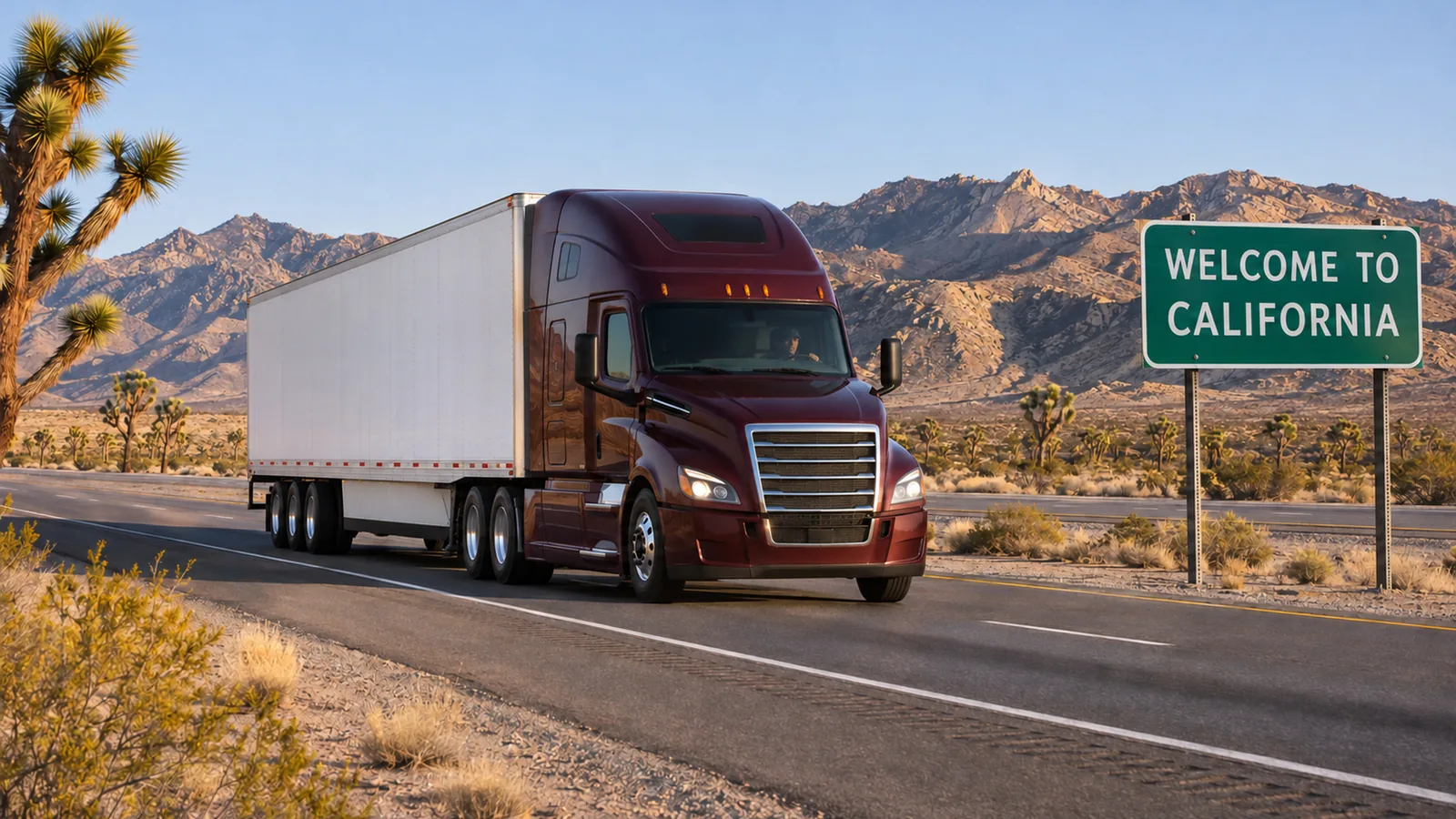
The CA number and the Motor Carrier Permit
Say Rosa, our made-up carrier, moves to Fresno and starts hauling inside California. Before she runs, she needs three things in this order: a USDOT number from FMCSA, a CA number from the California Highway Patrol, and a Motor Carrier of Property Permit, the MCP, from the DMV.
The CHP issues the CA number after you send a form called the CHP 362 to a local CHP Motor Carrier Safety Unit. The DMV then uses that CA number to issue the permit. The DMV checks that you carry the required liability insurance and workers' compensation coverage, and it oversees your enrollment in the Employer Pull Notice program, which reports your drivers' records to you.
Who needs the permit
The CHP's own answers say the permit applies to commercial vehicles run on California highways, loaded or empty. That includes trucks over 10,000 pounds, truck tractors, combinations over 26,000 pounds, hazmat haulers, and, for for-hire carriers, any motor vehicle at all, whatever its size. A carrier running only interstate or foreign freight isn't covered by the permit. The moment you want to haul a load that stays inside California, you need it.
The BIT inspection program
BIT stands for Basic Inspection of Terminals. The CHP picks terminals for inspection using a California Performance Safety Score, which is built from FMCSA's Safety Measurement System results. It's separate from the permit. Some permit holders aren't in BIT because of what they run, and some interstate-only carriers are in BIT without needing the permit. Ask the CHP where you fall.
California also has its own air-quality rules for heavy trucks, set by the California Air Resources Board. Check the board's current rules before you buy or bring a truck into the state.
California offices to know
| Office | What it's for |
|---|---|
| California DMV Motor Carrier Permit program | The MCP, insurance and the Employer Pull Notice program |
| CHP: Motor Carrier of Property Permit questions | Who needs the permit, the CA number and BIT |
| CHP: new carrier guidance | Where a new California carrier starts |
| California Air Resources Board | California's emissions rules for heavy trucks |
All of this sits on top of the federal rules. Interstate carriers based in California still need a USDOT number and authority from FMCSA; see how to get a USDOT and MC number and the federal offices list.
In the free PLSP course, start with Lesson 28 (interstate or intrastate, and which rules apply) and Lesson 29 (authority, registration and process agents).
Questions people ask
What's the difference between a CA number and a USDOT number?
The USDOT number is your federal ID from FMCSA. The CA number is California's, issued by the CHP. The DMV uses the CA number to issue your Motor Carrier Permit.
Do I need an MCP if I only run interstate?
According to the CHP, a carrier running only interstate or foreign freight isn't subject to the permit. Haul one load that stays inside California and you need it.
Start with Lesson 1 today.
Join with your name and email, set a password, choose a course and start. It's free.
Keep going
- Training and rules by stateAll states
Sources
- CHP: Motor Carrier of Property Permit frequently asked questions
- California DMV: Motor Carrier Permit program
- FMCSA registration (USDOT number and operating authority, in Motus)
Rules change. Check the current rule on the official site before you act on it. This is education and not legal advice.