
Home / Courses / Safety Supervisor
Safety Supervisor
Free trucking compliance training for safety supervisors
Keep the carrier legal and keep the truck running.
Say an auditor asks a carrier for a driver's file and the papers aren't there. This free trucking compliance training teaches the person who runs safety how to stay out of that spot. Compliance just means following the rules that keep a trucking company allowed to run. We go from authority and insurance all the way to what to do after a failed inspection.
Who is this compliance training for?
A carrier owner or the person who runs safety.
What does it cost?
The course is free. The Safety Supervisor certificate test is $25.
What's in it?
PLSP Lessons 28 to 57, 30 lessons in all, plus our Reasonable Suspicion training for supervisors.
How do I earn the certificate?
Finish Lessons 28 to 57 and pass the Reasonable Suspicion exam. You can start right at Lesson 28.
What you learn in compliance training
Set up the company and its authority
Whether the federal rules reach you at all, how authority and registration work, what the new-carrier safety audit looks at, insurance, and the filings that come due every year.
- Lesson 28: Starting a Trucking Company: Applicability and Jurisdiction
- Lesson 29: Authority, Registration and Designated Process Agents
- Lesson 30: Getting Ready for a New-Carrier Safety Audit
- Lesson 31: Insurance, Financial Responsibility and Coverage
- Lesson 32: Annual Filings, Taxes and State Credentials
Hire and qualify the first driver
How to bring on a commercial driver, what goes in a driver qualification file, and how drug and alcohol testing works with the Clearinghouse.
- Lesson 33: Recruiting and Qualifying Commercial Drivers
- Lesson 34: Building and Maintaining Driver Qualification Files
- Lesson 35: Drug and Alcohol Testing and Clearinghouse
Keep the driving legal and logged
How the hours-of-service clock runs, and how ELD records are kept, transferred and corrected.
- Lesson 36: Hours of Service: The Driver Clock
- Lesson 37: ELDs, Log Transfer, Malfunctions and Retention
Keep the equipment road-ready
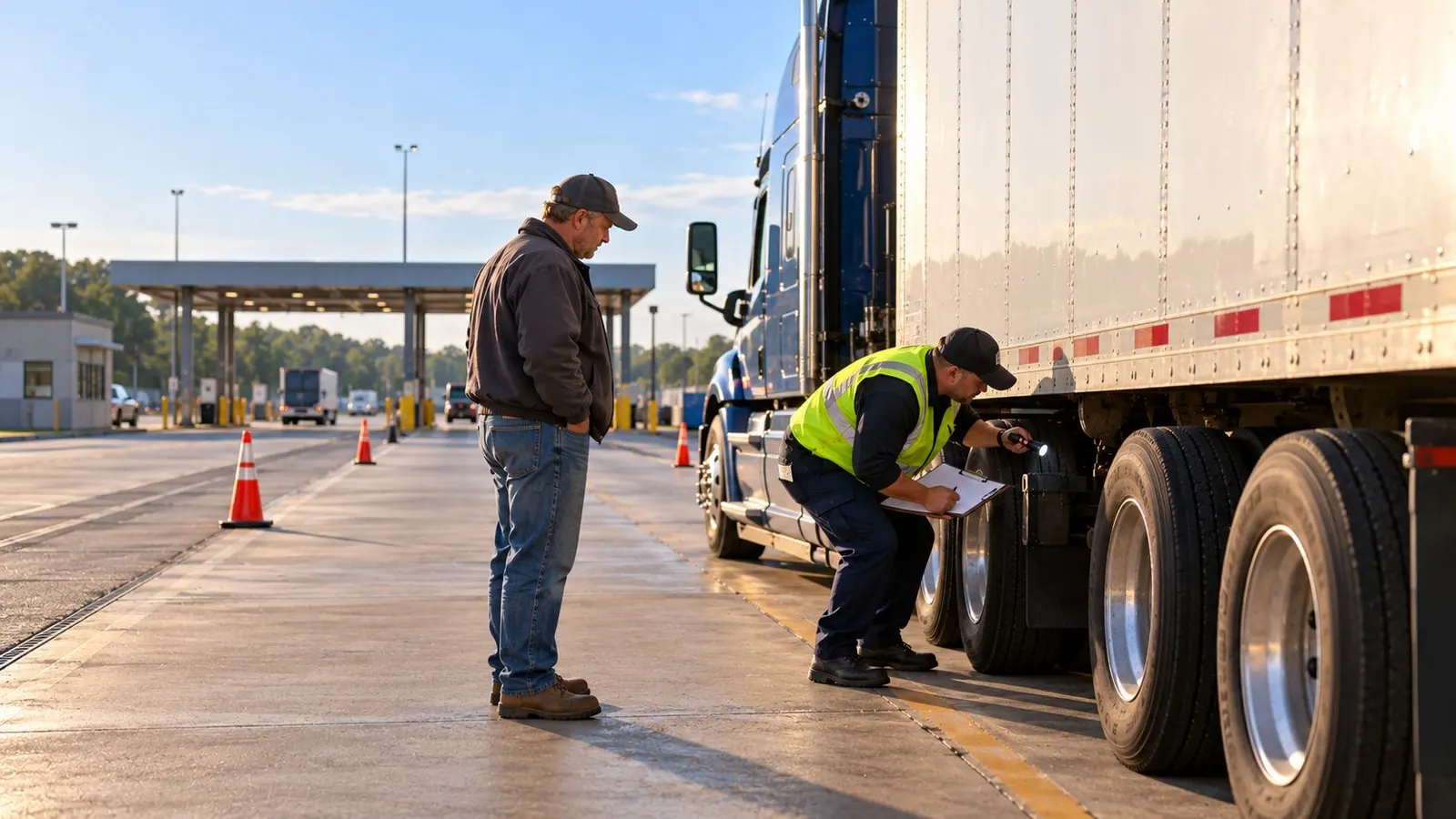
The daily inspection report, the repair paperwork, how a roadside inspection works, and the parts an inspector checks: brakes, tires, lights, steering, coupling and cargo securement.
- Lesson 38: Pre-Trip, Post-Trip and DVIR Defects
- Lesson 39: Inspection, Maintenance and Repair Records
- Lesson 40: DOT Roadside Inspection: Levels and Procedure
- Lesson 41: Brakes and Air-System Defects
- Lesson 42: Tires, Tread, Wheels, Lamps and Reflectors
- Lesson 43: Steering, Suspension, Coupling, Frame and Cargo Securement
Watch the record and fix what goes wrong
Safe driving, how to read a carrier's public safety record before anyone books a load, and the steps to take after a truck fails an inspection or goes out of service.
- Lesson 44: Unsafe Driving and Distracted Driving
- Lesson 45: Whose Truck, Whose Authority, Whose Risk?
- Lesson 46: The Government Records: SAFER, Licensing & Insurance, SMS
- Lesson 47: The Seven Safety Categories
- Lesson 48: Numbers You Can Actually Read
- Lesson 49: Get the Record and Read Every Row
- Lesson 50: Danger Signs in a Carrier's Record
- Lesson 51: Approve the Carrier Without Guessing
- Lesson 52: Driver History: Find the Record, Don't Invent the Story
- Lesson 53: Keep One Bad Hire From Breaking the Carrier
- Lesson 54: When FMCSA Starts Paying Attention
- Lesson 55: Fix a Bad Record the Right Way
- Lesson 56: Before You Book the Truck: The Final Check
- Lesson 57: Failed Inspection, Out of Service and Corrective Action
How we teach it
Why compliance has its own course
A missed filing can stop a plate, and a stopped plate stops the truck. A bad hire can follow a carrier for years. Most owners find out what they missed when an auditor or an inspector shows them.
So we made the safety side a course of its own. Build it as you go: alongside these lessons you put together a carrier startup portfolio that connects your operating plan, authority, insurance, driver and equipment evidence across twelve checkpoints.
What you hand in along the way
Each lesson has a step where you do the work yourself with real papers on the page. On the safety side that step matters most, because papers are what an auditor asks for. By the end you have driver, equipment, insurance and authority evidence in one place instead of scattered across a truck cab. See how every lesson is laid out.
Read when you're ready
Reading for the safety side
Three books from our library fit the safety side well. They aren't tested, so read them whenever it suits you.
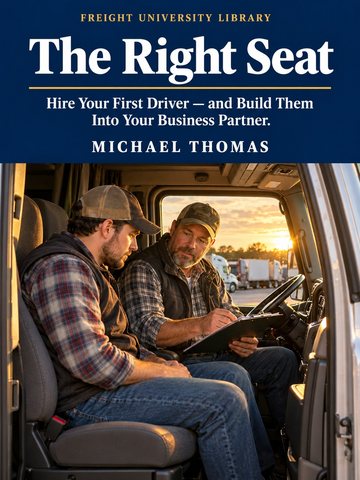 The Right SeatHiring your first driver, and building a partner.
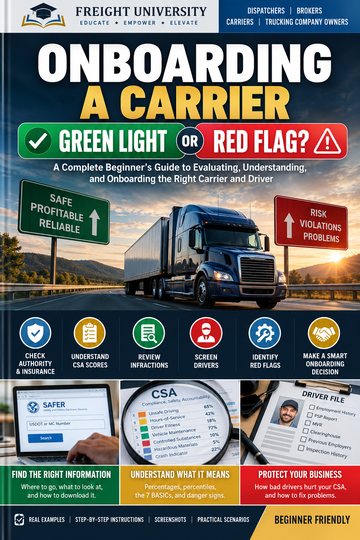 Onboarding a Carrier: Green Light or Red Flag?Active authority starts the review. It doesn't finish it.
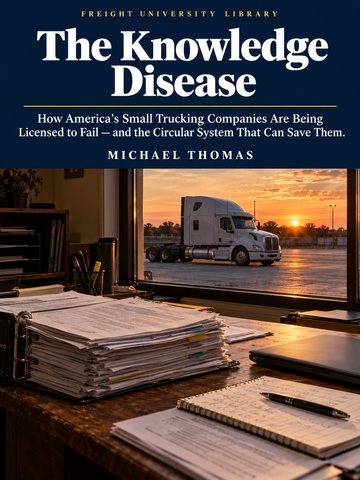 The Knowledge DiseaseWhy so many new carriers don't make it.
Questions people ask
Does this course replace a DOT audit or legal advice?
No. It teaches you the work. What the law says, what guidance says and what's practice are kept separate, so you can check the current rule on the official site before you act.
Is the certificate an FMCSA certification?
No. It shows you finished Freight University's training. It isn't a license or an FMCSA approval.
Does it include drug and alcohol testing?
Yes. Lesson 35 covers testing and the Clearinghouse, and the required Reasonable Suspicion training is part of earning the certificate.
Do I have to take the whole PLSP first?
No. If you only want the safety side, you can start right at Lesson 28.
Start at Lesson 28 today.
Join with your name and email, set a password, pick Safety Supervisor and go straight to Lesson 28.
Keep going
- Reasonable SuspicionDOT supervisor training, 49 CFR 382.603
- PLSPProfessional Logistics Service Provider
- How to build a trucking companyGuide
- CertificatesAll five certificates and the Master