

Home / Courses / Reasonable Suspicion
Supervisor training · 49 CFR 382.603
DOT reasonable suspicion training for supervisors
See it, write it down and make the call the right way.
Say a driver comes in Tuesday morning and something's off. You smell alcohol, or their speech is slurred. Who at your company can send that driver for a test? Under the rules of FMCSA, the federal agency over trucking, it has to be a supervisor who's had DOT reasonable suspicion training. If your trucking company runs CDL drivers, meaning drivers with a commercial driver's license, the people who supervise them need this.
The rule
Why is reasonable suspicion training required?
Federal rules require it. Under 49 CFR 382.603, a motor carrier with CDL drivers must make sure each person it designates to supervise those drivers gets at least 60 minutes of training on alcohol misuse and at least another 60 minutes on controlled substances use.
The training has to cover the physical, behavioral, speech and performance signs of probable alcohol misuse and drug use. That's so a supervisor can tell when there's reason to send a driver for a test, and can do it the right way.
Under 49 CFR 382.307, only a supervisor or company official trained this way can make that call. So if something feels wrong on a Tuesday morning and nobody at the company has been trained, you've got a problem before the driver ever gets to the collection site.
What the rule says, in plain words
At least 60 minutes on alcohol and 60 minutes on controlled substances. FMCSA calls it a one-time, two-hour requirement.
One-time training. The rule doesn't require a refresher.
When a supervisor sends a driver for a test, the observations must be written and signed within 24 hours or before results are released, whichever comes first.
The carrier keeps the training record while you supervise drivers, and for two years after you stop (49 CFR 382.401).
Who needs it
Who inside a trucking company needs this training?
Your job title doesn't decide it. Being designated to supervise CDL drivers does.
Carrier owners who hire drivers
If you run CDL drivers and you're the one who watches them, this is you.
Safety managers
The person who runs your drug and alcohol program should have this training.
Dispatchers and terminal managers
If your company designates them to supervise drivers, they need it. Dispatchers talk to drivers every day and are often the first to notice something.
Anyone taking over as supervisor
A new supervisor needs the training when a trained one leaves. Someone already trained at their current job doesn't have to take it again.
What FMCSA guidance says: the one exception
An owner-operator who drives alone and doesn't hire or supervise any other driver doesn't need this training. That comes from FMCSA guidance. The day that owner hires a driver, it changes. Owner-operators still need to be in a testing consortium.
Good practice, not law: brokers and PLSPs
A freight broker with no drivers of its own isn't required to have it. If you help run a carrier's back office, you'll help set up its testing program, and you may be the person the owner calls when something feels wrong. So we teach it to PLSP students too. A good company policy is to have a trained supervisor reachable on every shift.
About the course
What you get in this reasonable suspicion course
Nine parts: a welcome, then four parts on alcohol and four on controlled substances. You hear the teaching, answer the checks as you go, and finish each half with a practice scenario. Parts open in order, and you can leave and come back any time.
The course counts the time you actually spend listening and practicing, so you reach at least 60 minutes on each subject. Rosa, Sam and every company in the practice papers are made up, and what the law says, what guidance says and what's practice are kept separate.
How you earn the certificate
- Finish the welcome and all eight parts, in order.
- Reach at least 60 minutes on alcohol and 60 on controlled substances.
- Pass the 25-question final exam with 88% or better. That pass mark is ours. The rule doesn't require an exam.
Your certificate lists your alcohol minutes and your controlled substances minutes separately, with your exam score and date. Keep a copy and give one to the carrier you supervise for. The course is free. The certificate test is $25.
What the reasonable suspicion course covers
Welcome
What this training is, who needs it, and how it works.
- Welcome: what this training is, who needs it, and how it works
Alcohol
The alcohol rules, what misuse can look like, and going from what you saw to a test.
- Part 1: The alcohol rules and the reasonable suspicion standard
- Part 2: What alcohol misuse can look like
- Part 3: From observation to test
- Part 4: Writing it up, then the alcohol lab
Controlled substances
What the rule covers, what use can look like, and writing it down the way it has to be written.
- Part 1: The drug rules: Schedule I, prescriptions, marijuana and the DOT test
- Part 2: What drug use can look like: signs by group, look-alikes and plain-word records
- Part 3: The test and what follows: sending the driver, refusals, the Clearinghouse and return to duty
- Part 4: Records, risk and the real world, then the controlled substances lab
Read when you're ready
From our developmental library
These books aren't part of the rule and there's no test on them. They go with the same job: knowing who's in your truck and checking the record before you hand over the keys.
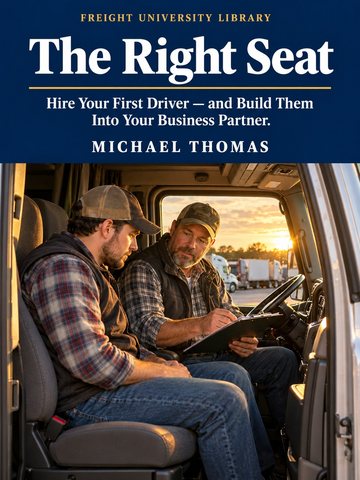 The Right SeatHiring your first driver, and building a partner.
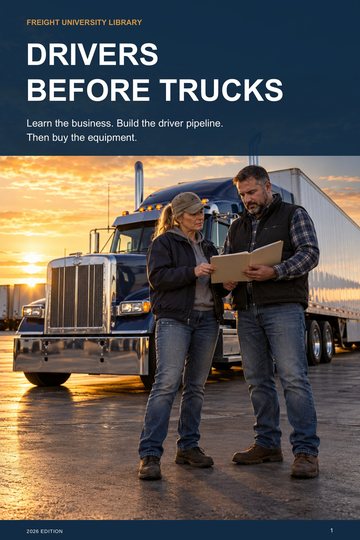 Drivers Before TrucksLearn the recruiting before you buy the equipment.
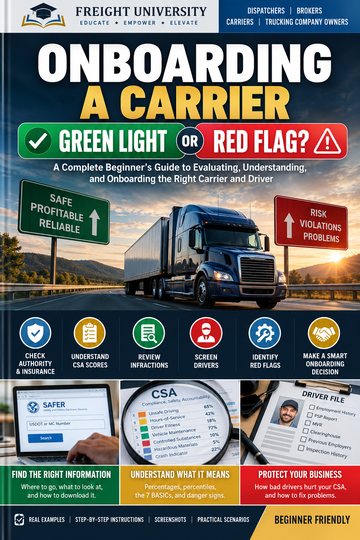 Onboarding a Carrier: Green Light or Red Flag?Active authority starts the review. It doesn't finish it.
Questions people ask
Is reasonable suspicion training required by FMCSA?
Yes, for anyone a motor carrier designates to supervise CDL drivers. The rule is 49 CFR 382.603.
How long is DOT reasonable suspicion training?
At least 120 minutes in total: at least 60 on alcohol misuse and at least 60 on controlled substances.
Do supervisors have to retake it?
The rule says recurrent training isn't required. Your company can choose to refresh it.
Does an owner-operator need it?
FMCSA guidance says not if you drive alone and don't hire or supervise other drivers. Once you hire a driver, you do.
Is this course approved by FMCSA?
FMCSA doesn't approve or endorse private supervisor training companies, ours included. What matters is that your supervisors get the training the rule requires, and that you keep the record.
What does the course cost?
It's free. The certificate test is $25.
Get your supervisors trained.
Join free, open Reasonable Suspicion and start with the welcome.
Keep going
- Safety SupervisorTrucking compliance training
- PLSPProfessional Logistics Service Provider
- Drivers Before TrucksTruck driver recruiting course
- How to build a trucking companyGuide
Sources
- 49 CFR 382.603: training for supervisors
- 49 CFR 382.307: reasonable suspicion testing
- 49 CFR 382.401: retention of records
- FMCSA: do I need to train my CDL driver supervisors?
- FMCSA: DOT drug and alcohol supervisor training guidance
- FMCSA: owner-operators and reasonable suspicion
Rules change. Check the current rule on the official site before you act on it. This is education and not legal advice.