
FU·010 · Book · 51 pages
Drivers Before Trucks
The practical guide to learning the business, recruiting drivers, and buying equipment in the right order.
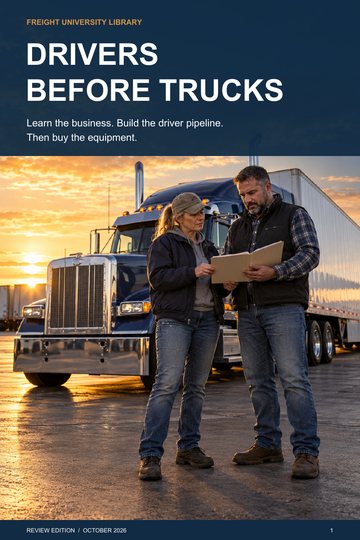
A truck is a purchase. A trucking business is a responsibility.
About the book
What it's about
In brief: Learn the business, build a driver pipeline, and buy equipment in the right order. A practical guide for new carriers and small fleets.
Buying a truck does not create a qualified driver, workable freight, or a profitable operation. Drivers Before Trucks helps new carriers and small fleets put those decisions in the right order: learn the business, define the job, build a credible driver pipeline, and coordinate the launch before committing to equipment.
This 51-page illustrated field guide covers practical recruiting channels, clear job advertisements, candidate follow-up, qualification responsibilities, retention, cash planning, and the cost of an empty seat. Five printable worksheets turn the lessons into a job brief, vacancy budget, recruiting review, qualification index, and pre-purchase decision.
Written for non-CDL equipment owners, people planning a trucking business, new motor carriers, and small fleets; the regulatory discussion primarily addresses U.S. for-hire operations using CDL-required equipment. October 2026 review edition. Financial scenarios, recruiting budgets, and case examples are illustrative. The book provides education, not a complete compliance manual or employment contract. Nine AI-generated images depict fictional scenes. Worksheets are printable, not interactive PDF forms.
What you'll learn
Five things to take away
- Define the actual job, schedule, pay structure, and operating needs.
- Build a measured recruiting process using job boards, local outreach, workforce contacts, and referrals.
- Calculate costs on all miles and distinguish cash burn from foregone contribution.
- Understand the difference between candidate interest, qualification, and permission to dispatch.
- Coordinate equipment, insurance, hiring, and operating readiness.
- Maintain a driver pipeline and improve retention after the first hire.
Inside
Chapter highlights
Owning the truck does not create the people, work, or systems needed to run it.
Serious risk deserves accurate numbers, not exaggerated ones.
Learn enough to recognize a bad decision before it becomes an expensive obligation.
The relevant labor market is the one willing and qualified to do your actual job.
A small operator needs a repeatable process, not a desperate advertisement.
Interest is the beginning of a process. It is not authorization to dispatch.
Retention begins when the job you deliver matches the job you described.
Readiness is evidence you can review, not a date you feel pressured to meet.
Inside the pages
Chapter art

Chapter 1 · The equipment-first trap 
Chapter 2 · Read the evidence correctly 
Chapter 3 · Invest in knowledge first 
Chapter 4 · The driver reality and the empty seat 
Chapter 5 · Build your own driver pipeline 
Chapter 6 · Screen carefully and make the first hire 
Chapter 7 · Keep the pipeline alive 
Chapter 8 · Make the purchase decision


Original AI-generated illustrations of fictional people and situations. They do not depict actual customers, employees, trucks, or business results.
Built into Freight University
Keep the carrier alive and growing.
Freight University teaches trucking companies to last and grow. That starts before the truck: learn the business, write the real job, build and qualify a driver pipeline, and coordinate the launch so equipment arrives into an operation that can run it. The five worksheets in this book are the same decisions Freight University asks every new carrier to make on paper first.
See the free trainingKeep reading
More from the library
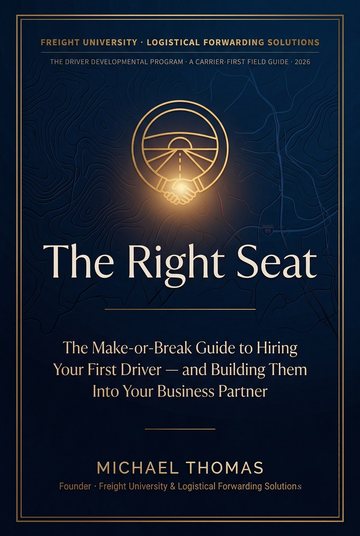
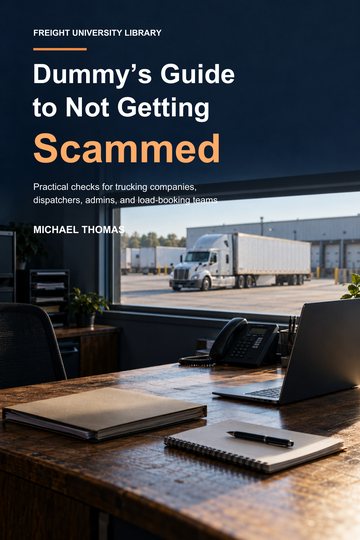

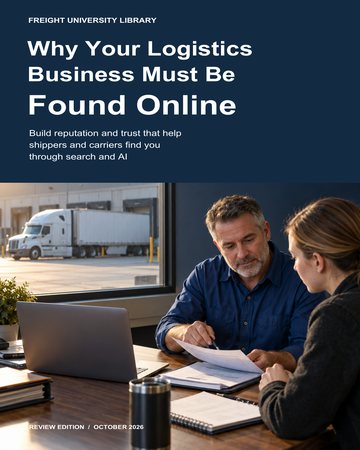
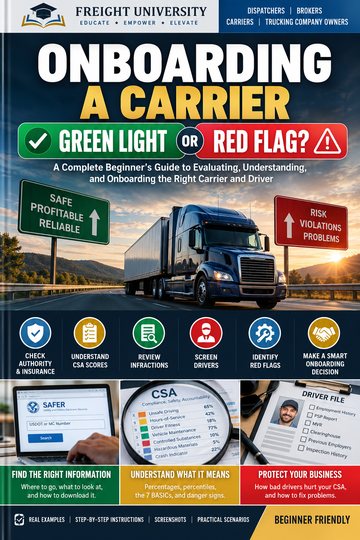
FAQ
Questions about this book
Should I recruit a driver before buying a truck?
Test the job and build a credible candidate pipeline before accepting irreversible equipment costs. Coordinate qualification, coverage, registration, and delivery; candidate interest alone is not permission to dispatch.
Is this book for owners who do not have a CDL?
Yes. It explains the responsibilities a non-CDL equipment owner must organize. The driver's licensing and other requirements still depend on the actual vehicle and operation.
Does the book include driver recruiting templates?
It includes a model advertisement and five worksheets covering the job brief, empty-seat budget, recruiting review, qualification and dispatch release, and the pre-purchase decision.
Does every parked truck lose $1,000 a day?
No universal amount is assumed. The book shows how to calculate continuing cash obligations and evaluate foregone contribution separately, using clearly labeled examples.
What if I already bought the truck?
Chapter 8 provides a recovery plan: establish the facts, review cash and obligations, define the job, rebuild recruiting, and compare realistic next steps without lowering qualification standards.
Does the book guarantee a hire or business success?
No. It provides a decision process and practical tools. Hiring outcomes, costs, operating requirements, and business results depend on the actual circumstances.
Ready when you are